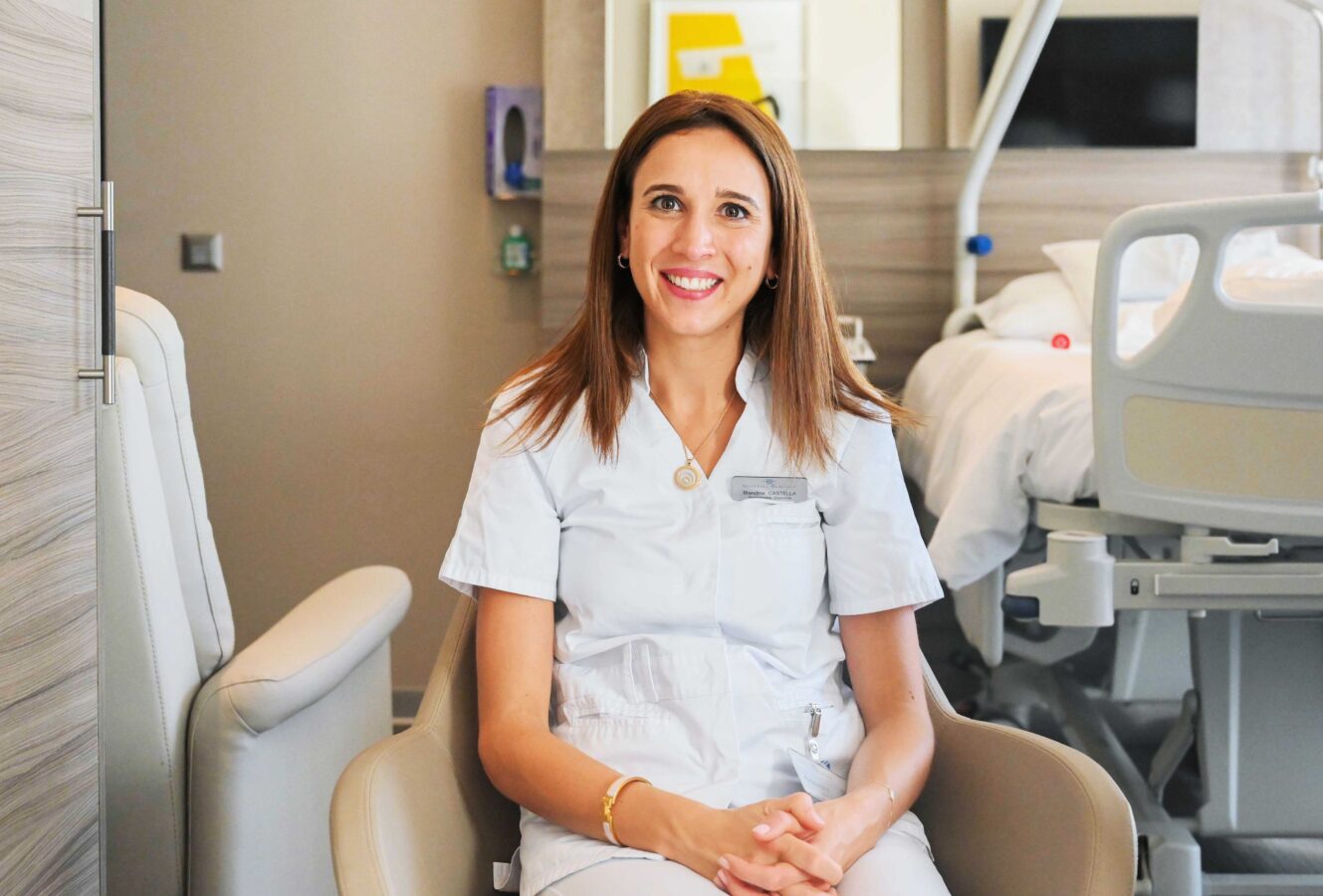
MotherStories takes you behind the scenes of a childbirth at the Clinique Générale-Beaulieu. Throughout the year, you’ll discover our interviews highlighting the various people involved in a childbirth and the role each plays before, during, and after the birth. Today, learn more about the often-overlooked yet essential role of a nursing assistant in our interview with Maëva Griot.
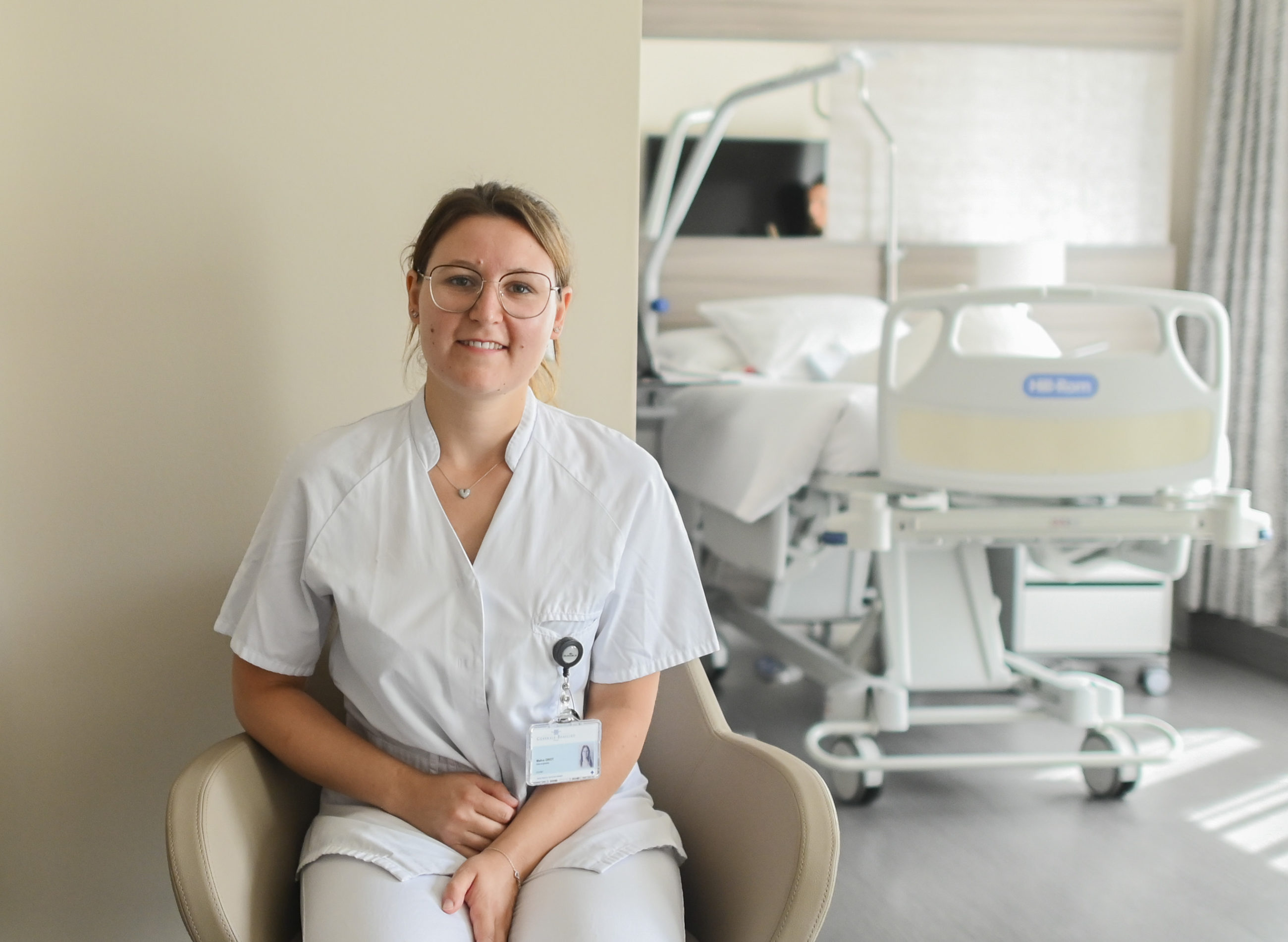
Maëva, can you introduce yourself in a few words?
My name is Maëva, I’m 25 years old, and I’ve been a nursing assistant for 5 years. I joined the team at Clinique Générale-Beaulieu almost a year ago. Before that, I worked with the elderly—two completely different age groups, but both share the need for care, a listening ear, a supportive presence, and kindness.
What is your role during childbirth?
Before the birth, my role is to prepare the delivery room for the couple’s arrival and to ensure that all the necessary equipment is available for the midwives, pediatric nurses, and the gynecologist. I review the birth plan, if there is one, so that I can best meet the parents’ expectations and needs—for example, if the mother wishes to give birth without an epidural or to labor in a birthing tub.
During childbirth, I am there to support the team on site (primarily midwives and pediatric nurses) and assist them in caring for the couples by responding to their requests.
We are a team, and communication among us is essential to effectively monitor the progress of labor and respond accordingly.
And then, during the postpartum period?
During the postpartum period, my role is to ensure that the mother’s room is perfectly clean and tidy and that she has everything she needs, in collaboration with the housekeeping staff (orders, meal trays, etc.). We’re trained to answer mothers’ questions, give them advice, and guide them on breastfeeding and baby care (diaper changes, baths, etc.). We form strong bonds with the mothers, especially those who’ve had a C-section, because we help them with all their daily tasks. They’re grateful for the help we provide, and for us, it’s very rewarding.
What are parents’ typical questions once they’re back in their room? A story to share?
They’re mostly about the baby (what the cries mean, how to tell when the baby is hungry, whether the baby has eaten enough, the best positions for breastfeeding, etc.).
One day, a mom rang my doorbell to ask if her baby was positioned correctly and in the best position for feeding. First, I reassured her that the baby’s position was perfect, but that she also needed to think about her own comfort, which is just as important. In fact, her shoulders were tense, and she was holding her baby at arm’s length. So I showed her how to use the nursing pillow (it certainly lives up to its name) so she could lean on it and relieve the strain.
Why did you choose to become a nursing assistant, and what motivates you most in your day-to-day work?
I chose this profession to share our knowledge with parents. Watching parents take their first tentative steps before seeing them, hour by hour and day by day, gain confidence. These are deeply emotional moments that I feel privileged and proud to experience. What motivates me most is waking up in the morning without knowing what the day has in store for us. Every assignment and every support experience is unique, which is very enriching and rewarding.




Share this article