The ease with which a child learns a new language is astonishing, but it comes as no surprise. Their brain’s plasticity allows them to recognize sounds more easily and to reproduce them while still maintaining a good accent. However, parents often wonder when and how to teach their child a language without causing a language disorder. To dispel some of the myths and provide clear answers on the subject, we sat down with Kasia, founder of the children’s language school Spell Languages, who will be answering our questions.

Kasia, can a newborn be exposed to another language?
To answer this question, we must first understand how it is possible to speak a language. Even while still in the womb, a 6-month-old fetus is able to analyze the structure of the language it hears. We are born with 100 billion neurons, which will form 1,000 trillion connections by the age of 3—that’s a lot! For our brain, acquiring a language is a natural process, especially at this stage.
A very interesting study by neurolinguist Patricia Kuhl of the University of Washington found evidence that by exposing babies under one year old to a foreign language for about 25 minutes a week, we enable them to become familiar with that language and to understand it.
Personally, my daughter has been immersed in three languages since she was born, and today, at 2.5 years old, she speaks all three! I am convinced that it is never too early to expose your child to foreign languages.
At what age should we start learning a second language?
If our goal is for our child to become bilingual during childhood, we should start before the age of 3. It has been proven that from birth to age 7, children lose their ability to learn naturally year by year.
At Spell Languages, we have observed that a child who is still in the natural stage of learning his or her native language will be more receptive to being spoken to in another language. Not understanding everything will seem normal to them, and they will learn with enjoyment and engagement.
On the other hand, children (even at preschool age) who have already mastered a first language in which they communicate will often feel more frustrated because they realize that they don’t understand everything and cannot express themselves as they would like to.
What advice would you give to parents to encourage bilingualism at home?
Find situations and environments where you can speak another language with your child. For me, this happened thanks to my daughter’s best friend. Her mom speaks English, so when we’re together, I speak to my daughter in English, whereas at home I speak to her in my native language, Polish. Her dad speaks to her in French.
In other words, if you have friends, babysitters, or nannies from different backgrounds, you can ask them to speak to your child in their native language. This may indeed be a challenge for your child’s brain, but if they are in regular contact with the same people, they will quickly master this new language—which will make their parents proud (smile).
If you are bilingual, help your child become immersed in a second language through simple activities that the whole family can do together in daily life. For example, reading stories, singing nursery rhymes, or playing games in the other language.
And of course, we at Spell Languages are here to help you learn! During after-school activities—whether after school, on Wednesdays, or Saturdays—children learn languages through play while following an educational program designed to help them reach their desired level.
We have recently launched Playgroups for younger children, ages 0 to 4. These are 45-minute sessions attended by parents, offering a fun introduction to English, Italian, German, or Spanish.
What are the different tools and platforms for learning while having fun?
Today we are proud to introduce something brand new to the Swiss market: the Emys robot. An electronic companion designed to teach children English in a fun way.
Board games such as "Memory" or "UNO" are perfect for building vocabulary. Building games help children express their creative vision and understand grammatical structures. Role-playing games allow them to experience the language and practice it without the pressure of it being "for real." Movement games help develop physical and language reflexes.
Feel free to visit our YouTube channel, where we share lots of easy ideas. Subscribe to receive inspiring videos every week.
In the end, it doesn't matter which platform you choose, as long as it involves play, because that's the key to learning.
You are offering summer camps this summer. Are there still spots available? If so, how can I get more information and sign up?
Yes, indeed! We offer 8 weeks of fun and unforgettable camps. Parents can choose from 6 languages: English, German, Italian, Spanish, Russian, and French. Our groups are divided by age: 4–6 years, 7–10 years, and 11–14 years. Children can be enrolled for one week, but parents often choose to send their children to us for several weeks at a time. In addition, we offer discounted rates for each registration for 2 or 3 consecutive weeks.
Find more information and book your preferred camp on our website now (to secure your spot). We will be publishing brochures with details on each theme very soon.
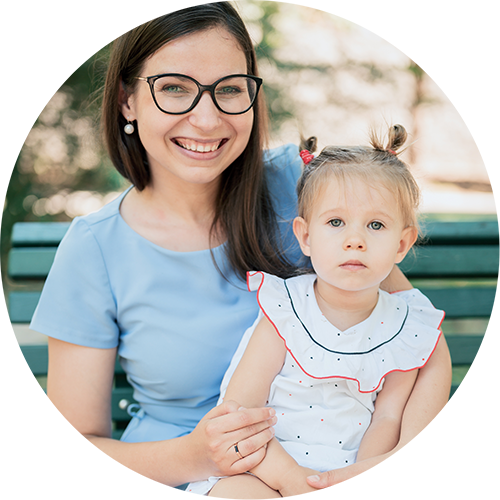
Kasia Katarzyna Butty
Founder of Spell Languages
Rue Conseil Général 20, 1205 Geneva
info@spell-languages.ch
www.spell-languages.ch


Share this article